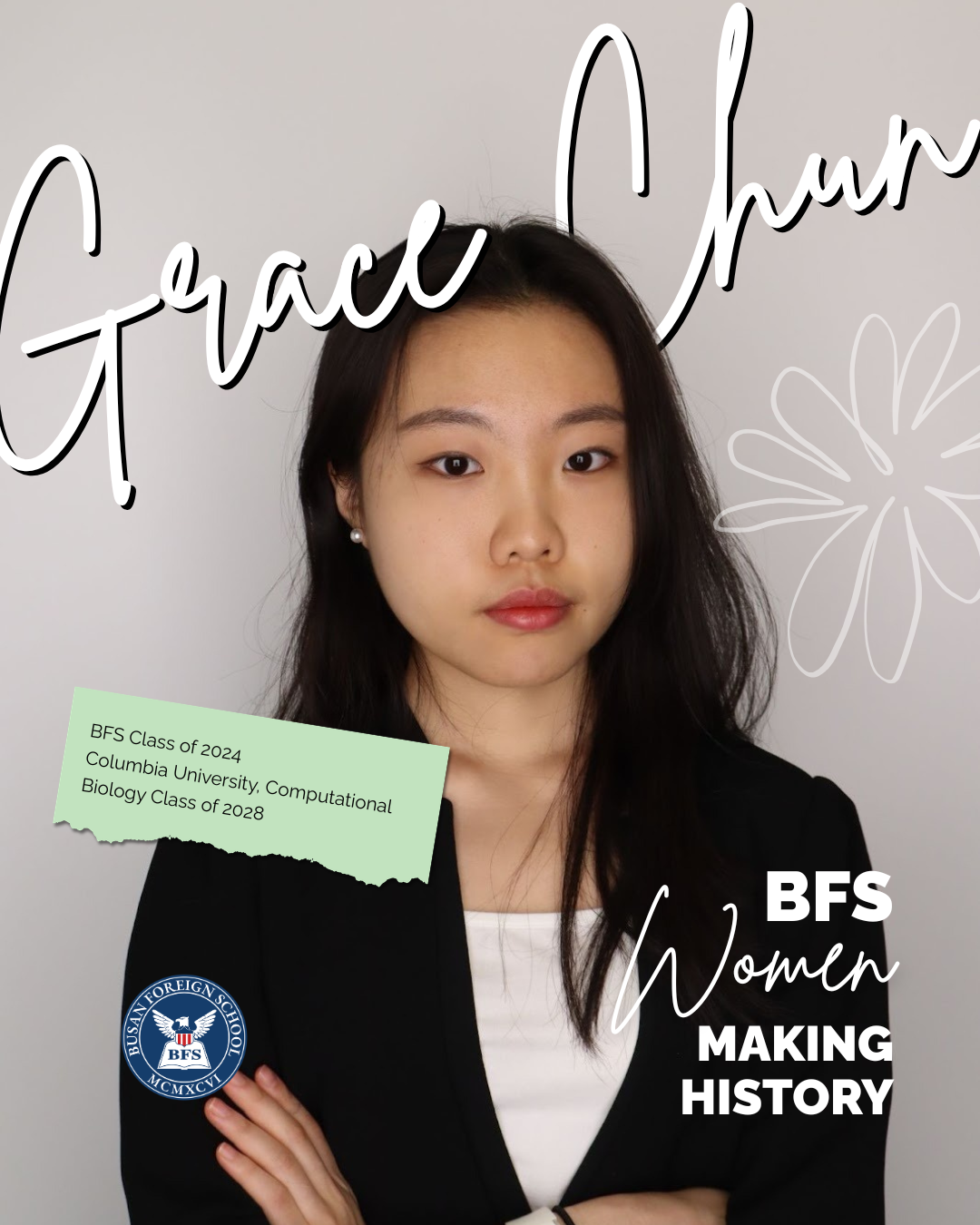
- BFS Class of 2024
- Columbia University, Computational Biology Class of 2028
Where are you currently studying or working, and what does a typical day look like for you?
I am currently a junior at Columbia University majoring in Computational Biology, an interdisciplinary field that uses computer science to understand complex biological systems. My research focuses on epigenetics, which explores how environmental factors can influence how our genes are expressed without changing the underlying DNA sequence.
A typical day for me includes attending classes, working on research projects, studying, and spending time with friends. It can be a busy schedule, but having a balance between academics and time to unwind keeps me motivated and makes my college experience both exciting and meaningful.
How did you choose your major, and did that decision evolve over time?
I’ve always been interested in biology, ever since I first learned about it in middle school. During my internship at the Institute for Basic Science at Pusan National University, I had the opportunity to apply computational modeling to analyze climate data, and that experience showed me how powerful computer science can be in addressing biological questions. Pursuing Computational Biology allows me to combine my interests in biology and computer science, and being able to investigate questions at the intersection of these fields is truly exciting.
How can students move from “I’m good at science” to “I see myself in STEM”?
It’s easy to enjoy something when you’re naturally good at it, but truly seeing yourself in STEM comes from learning to embrace the process, even when things are difficult. There are moments in STEM when I’m struggling with a problem, a concept, or a project that didn’t go as planned, yet I continue pushing through because I’m curious and engaged. Those are the moments when you start to truly connect with the work and see yourself as part of STEM, and they are some of the most rewarding experiences.
What helped you build resilience or confidence in those spaces?
What helped me build resilience and confidence in STEM was not being afraid to stand out, try new things, and ask questions. Pushing myself to embrace opportunities where I felt different or uncertain helped me grow. Speaking up, asking questions, and owning my perspective— even if I might be wrong— allows me to contribute fully and build confidence in any environment. I’m still uncertain at times, but I’ve learned that curiosity, persistence, and a willingness to take risks keep me moving forward.
What is one message you want young women at BFS to hear clearly?
Don’t be afraid to explore your interests, ask questions, and take on challenges — even if you feel different or uncertain. Your curiosity, persistence, and willingness to take risks will help you grow, build confidence, and make an impact in STEM and beyond.
Grace was also selected for Columbia University’s prestigious Summer Undergraduate Research Fellowship (SURF), conducting full-time research on genome stability and DNA replication — work that contributes to advancing understanding of diseases such as cancer.