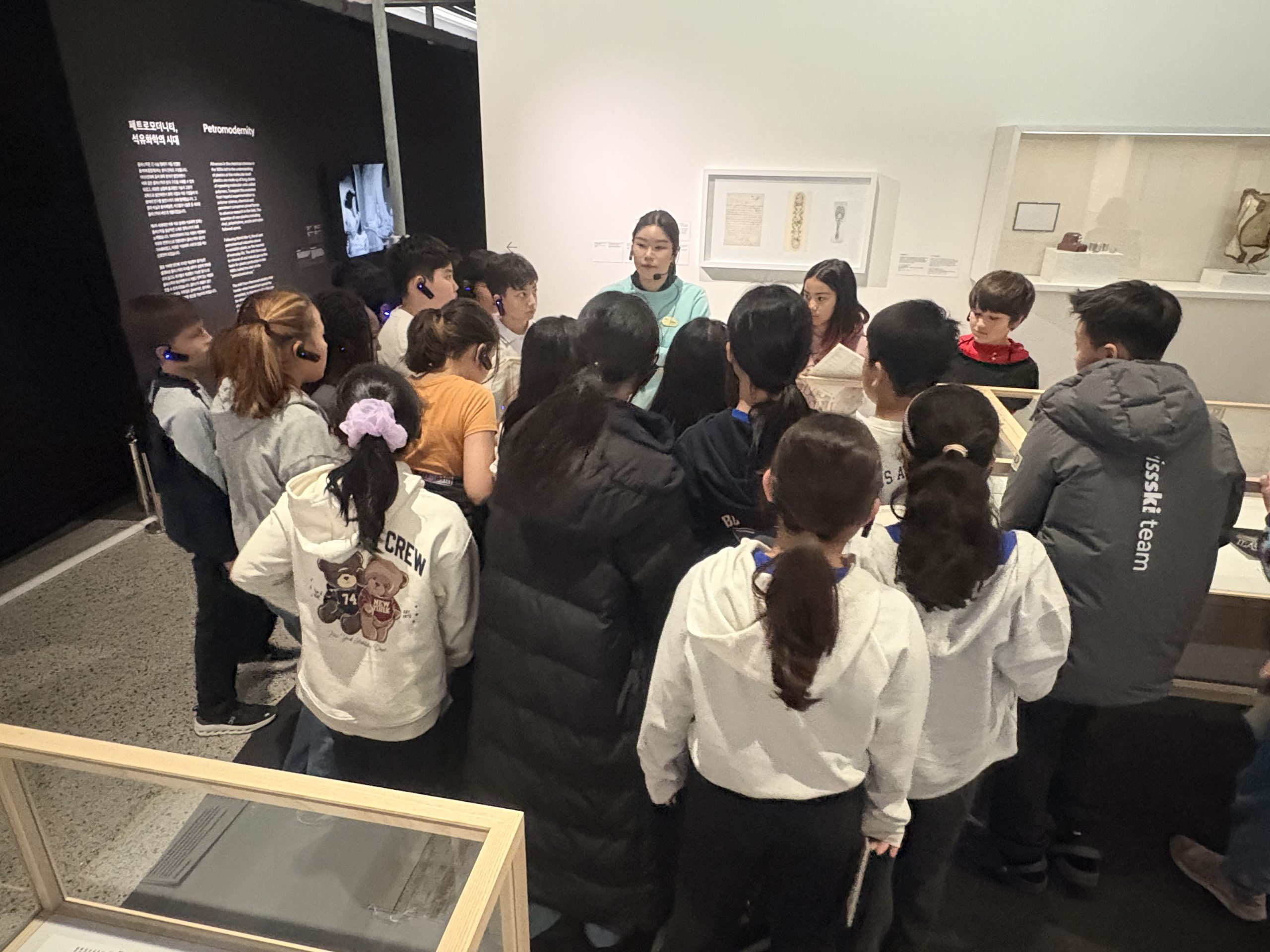
Last Friday, our Grades 3–5 students experienced a truly unique learning opportunity at Hyundai Motorstudio Busan, where they visited the international exhibition Plastic: Remaking Our World, presented in collaboration with the world renowned Vitra Design Museum.
Far more than a traditional field trip, this immersive exhibition invited students to think deeply about one of the most influential materials of the modern age: plastic.
Through interactive, design-based installations, students explored how plastic evolved from a revolutionary invention to a global environmental challenge. They examined how plastics are made, used, reused, and recycled—discovering how thoughtful design decisions shape our everyday lives and impact the natural world.
One of the highlights of the visit was seeing how Hyundai is using recycled materials in real products today. Students were able to touch and explore recycled car materials used in the Hyundai IONIQ 5 and Hyundai IONIQ 6. They also learned about Hyundai’s plastic-to-hydrogen (P2H) technology, which turns waste plastic into clean energy.
In the workshop area, students watched the “Precious Plastic” installation in action, where small pieces of shredded plastic are melted down and shaped into new items. This hands-on demonstration helped them see how materials can be reused instead of thrown away.
Students also viewed Plastic Atlas, a large art installation by Korean designer Jinyeong Yeon. The piece was created using recycled materials such as old seat covers, airbags, and seatbelts from retired vehicles. Spanning two floors of the exhibition, the installation helped students understand how materials can be given new life and reminded them that design choices affect our planet.
This experience connects directly to our BFS Amplified Science curriculum, where students explore real-world problems, investigate materials and systems, and think critically about sustainability. By seeing innovation in action, our learners were able to connect classroom science concepts to authentic global challenges — strengthening their understanding of how science, design, and responsibility work together in the world around them.
This visit directly supports our commitment to developing future-aware learners—students who understand the complex global challenges ahead and recognize their role in shaping solutions.
The experience reflected our SHARK Student Learning Outcomes:
- Socially Conscious – Students considered the environmental impact of materials and the importance of sustainable innovation.
- Hardworking – They engaged thoughtfully with complex ideas about production systems and environmental responsibility.
- Active Communicators – Through discussion and reflection, they shared insights and asked meaningful questions about design and sustainability.
- Respectful – They demonstrated appreciation for diverse perspectives in global design and environmental stewardship.
- Keep Learning – Most importantly, they left curious—eager to continue exploring how creativity and innovation can build a better future.
At Hyundai Motorstudio Busan, design is described as “Design to live by.” For our students, this exhibition became an opportunity to think about how they might design a more sustainable world—where creativity, responsibility, and innovation work together for the common good.
Experiences like this remind us that even our youngest learners are capable of engaging with big ideas—and that future-ready thinking begins now